Connectivity HSSGamepad: Complete Guide to Controller Connections
If you searched for “connectivity hssgamepad,” you are probably trying to understand how an HSSGamepad connects to a phone, PC, tablet, Smart TV, or another compatible gaming device. You may also be looking for help because the controller is not pairing, keeps disconnecting, or connects but does not respond correctly.
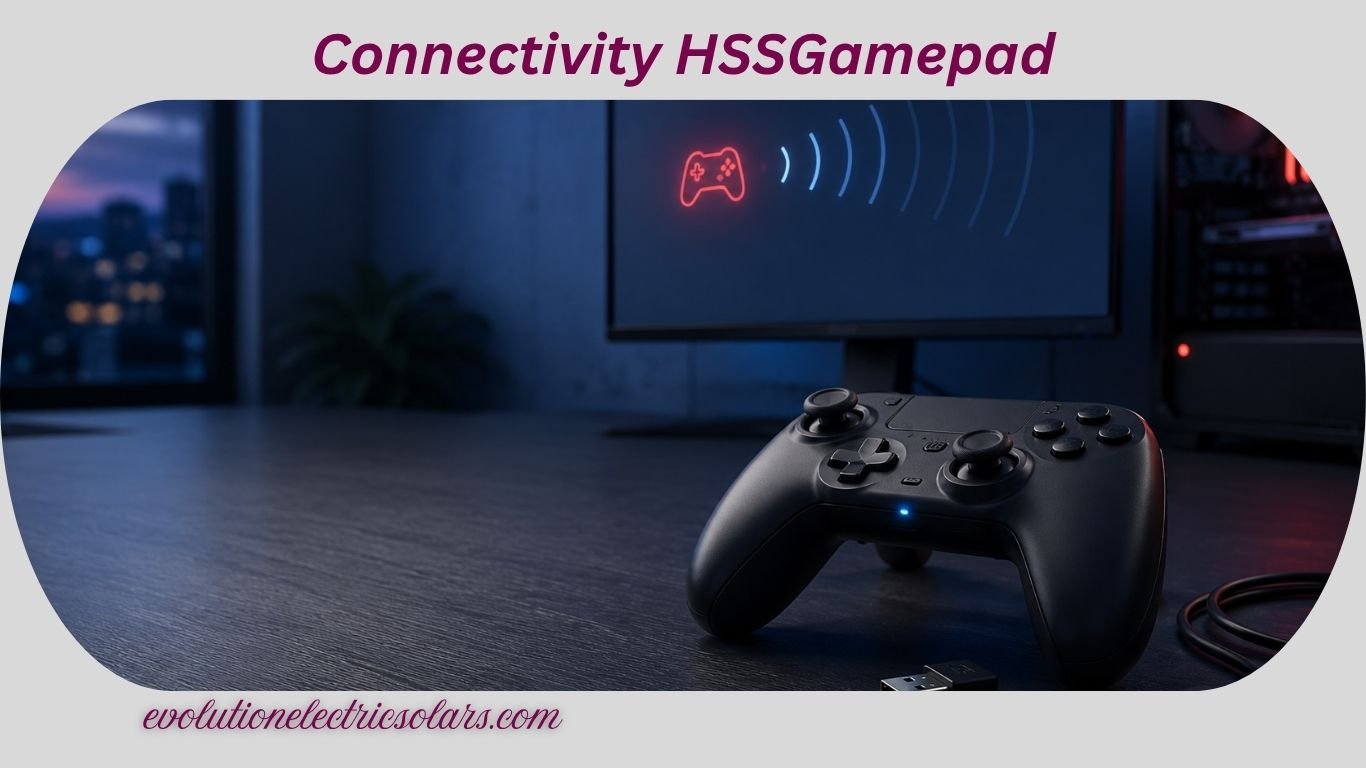
The term “connectivity HSSGamepad” is best understood as the different ways an HSSGamepad-style controller communicates with a gaming device. Current online information commonly describes three connection options: Bluetooth, 2.4GHz wireless through a USB dongle, and wired USB. Each option has different advantages, limitations, and setup requirements.
Because exact hardware can differ between controller models, it is important not to assume that every HSSGamepad has exactly the same buttons, firmware, ports, or supported devices. Some online guides also make broad compatibility claims that may not apply to every model. For that reason, the controller’s own manual and the device manufacturer’s compatibility information should be treated as the final authority.
This guide explains connectivity HSSGamepad in simple language. It covers connection modes, pairing, device compatibility, input lag, wireless interference, USB connections, troubleshooting, security, maintenance, and practical tips for United States users.
What Is Connectivity HSSGamepad?
Connectivity HSSGamepad refers to the communication link between an HSSGamepad-style controller and the device running a game.
When you move a joystick, press a button, or pull a trigger, the controller sends an input signal to the connected device. The device then passes that input to the game.
A stable connection allows the game to respond quickly and consistently. A weak or incorrect connection can result in delayed inputs, missed button presses, random disconnections, or a controller that appears connected but does not work inside a game.
The three commonly discussed connection methods are:
- Bluetooth wireless
- 2.4GHz wireless through a USB receiver
- Wired USB
These methods are not identical. Bluetooth is convenient because it does not normally require a separate receiver. A 2.4GHz dongle can provide a dedicated wireless link. Wired USB avoids wireless interference and can provide very consistent input.
Recent guides about HSSGamepad connectivity consistently describe these three connection approaches, although exact features can vary by model.
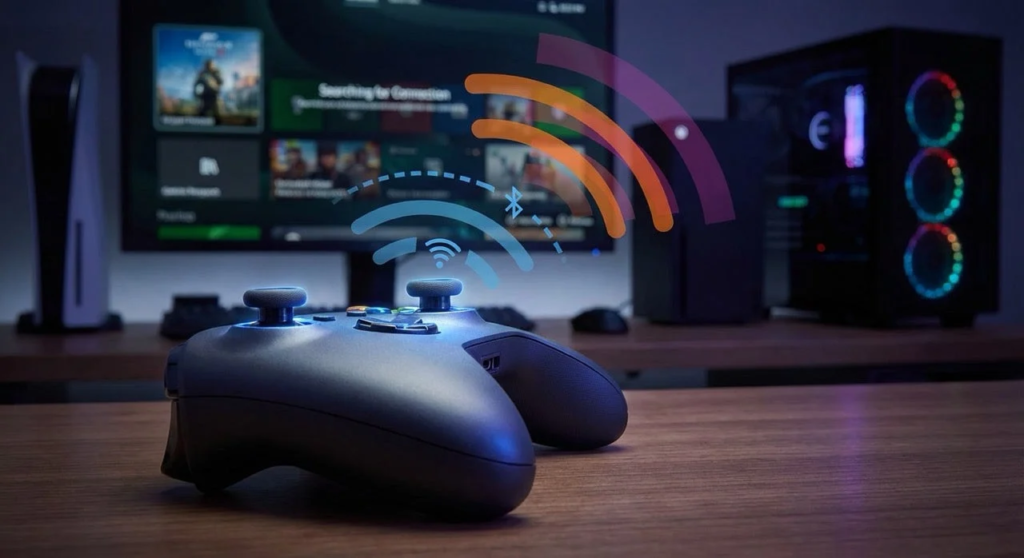
The Three Main HSSGamepad Connection Modes
Most information currently available about connectivity HSSGamepad-style controllers points to three main connection methods: Bluetooth, 2.4GHz wireless, and wired USB.
Bluetooth Connectivity
Bluetooth connects the controller directly to a compatible device without a dedicated USB receiver.
This makes Bluetooth especially convenient for devices such as smartphones, tablets, laptops, and other hardware that already includes Bluetooth.
The general process is simple:
- Charge the controller.
- Turn it on.
- Put it into Bluetooth pairing mode.
- Open Bluetooth settings on the device.
- Look for the controller’s Bluetooth name.
- Select the controller.
- Confirm pairing if the device asks.
Once paired, the device may remember the controller for future sessions.
Bluetooth is convenient, but wireless conditions can affect performance. Distance, physical obstacles, nearby wireless devices, and the device’s Bluetooth implementation can all influence the connection.
2.4GHz Wireless Connectivity
A 2.4GHz connection normally uses a dedicated USB receiver or dongle.
Also Read:Wallpostmedia Com: A Complete Guide to Digital Publishing and SEO
The receiver is plugged into the gaming device, while the controller communicates wirelessly with that receiver.
This approach is different from Bluetooth because the controller is using its dedicated receiver rather than the host device’s normal Bluetooth connection.
For PC gaming, this can be a useful middle ground between Bluetooth convenience and wired reliability.
Some HSSGamepad-style controllers are supplied with a small receiver that may be stored inside the controller or elsewhere in the packaging. However, this is model-dependent, so users should check their own controller before assuming a receiver is included.
Wired USB Connectivity
Wired USB is the most direct connection method.
The controller is connected to the gaming device using a USB data cable. Depending on the model, the controller may use USB-C or another USB connector.
The main advantage is that there is no wireless signal between the controller and the device.
This can make wired mode useful for troubleshooting. If Bluetooth and 2.4GHz connections are failing, a wired connection can help determine whether the problem is related to wireless pairing or something more basic.
The disadvantage is obvious: the controller is physically connected to the device.
Bluetooth vs 2.4GHz vs Wired USB
Choosing the right connection depends on how and where you play.
| Connection | Main Advantage | Main Limitation | Best Use |
| Bluetooth | Easy and cable-free | Can be affected by wireless conditions | Phones, tablets, laptops |
| 2.4GHz dongle | Dedicated wireless connection | Requires USB receiver | PC and compatible devices |
| Wired USB | Direct and consistent | Cable limits movement | Competitive or troubleshooting use |
There is no single connection method that is perfect for every situation.
For casual mobile gaming, Bluetooth is often the simplest choice.
For wireless PC gaming, a 2.4GHz receiver may be attractive when the controller and receiver are supported.
For the most predictable connection, wired USB is often the simplest fallback.
How to Connect HSSGamepad Through Bluetooth
Bluetooth setup is generally straightforward, but the exact button combination used to activate pairing mode can vary by controller model.
Start by charging the controller.
A very low battery can cause strange behavior, including failure to enter pairing mode or unexpected disconnections.
Next, turn on Bluetooth on your phone, tablet, computer, or other compatible device.
Then activate Bluetooth pairing mode on the controller according to its manual.
Open the device’s Bluetooth settings and search for available devices.
The controller may appear under a name such as “HSS Gamepad,” but the exact name can vary.
Select it and wait for the connection to complete.
After pairing, test the controller before opening a demanding game. Try moving the sticks and pressing several buttons.
If the controller appears connected but the game does not recognize it, the problem may not be Bluetooth itself. The game may not support that controller or may require a particular input mode.
How to Connect HSSGamepad With a 2.4GHz Dongle
The 2.4GHz method usually requires a compatible USB receiver.
First, locate the receiver.
Check the controller’s storage compartment, packaging, or any dedicated receiver slot if the model has one.
Plug the receiver into a compatible USB port on the gaming device.
Turn on the controller and select its 2.4GHz mode if the controller has a mode-selection button or switch.
Give the device a moment to recognize the controller.
On a Windows PC, you can test whether Windows recognizes the controller by using its built-in controller testing tools.
If nothing happens, try another USB port.
Avoid assuming that the receiver is interchangeable with another wireless controller. Dedicated receivers are often designed to communicate with a specific controller family or model.
One important point is that 2.4GHz wireless is not the same thing as Wi-Fi. A controller using a 2.4GHz receiver does not mean that the controller is joining your home Wi-Fi network.
How to Connect HSSGamepad With USB
Wired USB is usually the simplest method to test.
Connect the appropriate data cable to the controller.
Connect the other end to the gaming device.
Some controllers automatically switch into wired mode. Others may require a specific button or mode selection.
Wait for the operating system to recognize the controller.
Then test the controller.
If it works through USB but not through Bluetooth, the controller itself may be working correctly and the problem may be limited to wireless pairing or settings.
If the controller does not work through USB either, check the cable and USB port before assuming the controller is defective.
A major detail is that not every USB cable supports data. Some inexpensive cables are designed mainly for charging. If a controller charges but is not detected by a computer, try a known-good data cable.
HSSGamepad Compatibility With Windows PCs
Windows PCs are common destinations for multi-platform game controllers.
A controller can connect to Windows but still require the correct input mode before a game recognizes it.
Some controllers support input standards such as XInput or DirectInput. These are important because different games and applications may expect different controller interfaces.
If Windows sees the controller but a game does not, check the game’s controller settings.
You can also use Windows’ built-in game-controller testing features to see whether buttons and sticks are producing input.
If the controller works in Windows’ testing environment but not inside a particular game, the game configuration becomes a more likely source of the problem.
Windows updates can also affect drivers and device behavior. If the controller suddenly stops working after an operating system update, check Windows Update and the device’s official support information.
HSSGamepad Connectivity With Android Devices
Android phones and tablets can be useful for controller gaming.
Bluetooth is usually the most convenient option when the Android device supports the required controller profile.
Before pairing, turn on Bluetooth and put the controller into pairing mode.
After the controller appears, select it.
If Android reports that the device is connected but the game does not respond, check whether the game supports physical controllers.
Not every Android game supports a gamepad.
Some games are designed primarily for touchscreen controls. Others support controllers but require manual button mapping.
Android versions, phone manufacturers, and game applications can also behave differently.
If Bluetooth pairing works but a particular game does not, do not immediately conclude that the controller is broken.
HSSGamepad Connectivity With iPhone and iPad
Apple devices can support Bluetooth gaming controllers, but compatibility depends on both the controller and the operating system.
The safest approach is to check whether your exact controller model is supported by the current version of iOS or iPadOS.
Open Bluetooth settings, activate pairing mode on the controller, and look for the controller in the available device list.
After connecting, test it in a game known to support controllers.
If a controller connects but the game ignores it, the issue may be application compatibility rather than Bluetooth connectivity.
For Apple devices, controller support can also vary between games. A connection at the operating-system level does not guarantee universal game support.
HSSGamepad Connectivity With Smart TVs
Some Smart TVs and streaming devices support Bluetooth controllers.
Others may provide USB ports that can work with compatible wired controllers or wireless receivers.
The exact process depends heavily on the TV operating system.
Look for menus such as Bluetooth devices, accessories, controllers, or connected devices.
If the TV does not support the required controller connection method, a controller may not work even if it functions correctly with a PC.
This is a good example of why “compatible with Smart TVs” should not be treated as a universal statement. Smart TVs use different operating systems and hardware.
Common Connectivity HSSGamepad Problems
Connectivity problems can look very different.
The controller may fail to appear during Bluetooth scanning.
It may connect and then disconnect.
It may show as connected but not respond inside a game.
A 2.4GHz receiver may be plugged in but fail to detect the controller.
A USB connection may work for charging but not for data.
These symptoms can have different causes.
Common causes include:
- Low battery
- Incorrect pairing mode
- Old Bluetooth pairing information
- Wireless interference
- Incorrect controller input mode
- Unsupported game
- Unsupported device
- Bad USB cable
- Faulty USB port
- Driver problems
- Outdated software
- Receiver problems
- Hardware damage
Current troubleshooting guides also identify battery level, interference, old pairing information, drivers, and incorrect modes as common causes.
What to Do When HSSGamepad Will Not Pair
If the controller will not pair, start with the simplest checks.
First, charge it.
Also Read:Agentic AI Pindrop Anonybit: How Modern Identity Security Works
Next, make sure it is not already connected to another device.
Bluetooth devices sometimes reconnect automatically to a previously paired device. If the controller is trying to reconnect elsewhere, a new device may not see it correctly.
Remove the old controller entry from your device’s Bluetooth settings.
Then restart Bluetooth.
Put the controller back into pairing mode and search again.
If necessary, restart both the controller and the host device.
Do not repeatedly attempt random button combinations. Exact pairing commands can differ between models.
If the controller’s manual provides a reset process, follow that process.
What to Do When the Controller Connects but Does Not Work
This is one of the most confusing connectivity problems.
The operating system may display the controller as connected, but a game may ignore it.
First, check whether the controller produces input outside the game.
On Windows, use the built-in game-controller testing interface.
If buttons respond there, the physical connection is probably functioning.
Next, check the game’s controller settings.
The game may expect a particular input standard.
Steam and other gaming platforms can also have controller configuration settings that affect how inputs are presented to games.
If you are using an emulator, check the emulator’s controller mapping separately.
The important lesson is that “connected” and “recognized by the game” are two different things.
How to Fix HSSGamepad Bluetooth Disconnections
Repeated Bluetooth disconnections can be frustrating, but they do not automatically indicate hardware failure.
Start by charging the controller.
Then reduce the distance between the controller and the device.
Remove unnecessary wireless devices from the immediate area if possible.
Also check for physical obstacles.
Routers, computers, USB 3.x devices, wireless accessories, and other equipment can contribute to a busy radio environment.
If the controller was previously paired with several devices, remove unnecessary pairings and create a fresh connection.
If the problem happens only with one device, test the controller with another compatible device.
This simple comparison can help identify whether the problem is with the controller or the original host device.
How to Fix 2.4GHz Dongle Problems
If the receiver is connected but the controller does nothing, check the controller’s mode first.
A receiver cannot help if the controller is currently operating in Bluetooth mode.
Confirm that the receiver is properly inserted.
Try another USB port.
If possible, connect the receiver directly instead of through a USB hub.
Then restart the controller.
If the receiver still does not work, test the controller using another supported connection method.
If Bluetooth works but the 2.4GHz receiver does not, the receiver or its pairing may be the problem.
Some controllers use factory-paired receivers, while others may require a pairing process. Follow the exact instructions for your model instead of using generic button combinations from another controller.
How to Fix HSSGamepad USB Problems
If USB connectivity is not working, start with the cable.
Try another known-good data cable.
Then test another USB port.
If the controller is connected through a USB hub, connect it directly to the computer where possible.
On Windows, check whether the operating system reports an unknown USB device.
A controller that charges but is not detected may be using a charge-only cable.
If the controller works with one cable and not another, the original cable is likely the problem.
If multiple cables and ports fail, the issue may be related to the controller’s USB port, firmware, or hardware.
Understanding Input Lag in HSSGamepad Connectivity
Input lag is the delay between an action on the controller and the corresponding action appearing in the game.
Every connection method has some amount of processing and transmission delay.
However, the connection method is only one part of the complete system.
Game performance, display latency, frame rate, operating-system processing, wireless interference, and controller firmware can all affect how responsive a game feels.
This means it is not accurate to assume that every Bluetooth connection will automatically have unacceptable lag.
For many casual games, Bluetooth can provide a perfectly usable experience.
For games where timing is extremely important, users may prefer a wired USB connection or a reliable dedicated wireless receiver.
The best approach is to test the controller in the games you actually play.
How Wireless Interference Can Affect Connectivity
Wireless signals share the radio environment with other devices.
The 2.4GHz frequency range is widely used by consumer wireless technology.
A crowded wireless environment can contribute to instability.
You can reduce possible interference by keeping the controller reasonably close to the receiver or host device.
For a 2.4GHz receiver, avoid placing the receiver in an awkward location behind a large metal computer case if a better USB position is available.
For Bluetooth, keeping the controller and host device reasonably close can also help.
Do not treat every wireless problem as interference, though. Low battery, incorrect modes, software problems, and damaged hardware can produce similar symptoms.
HSSGamepad Connectivity and Software Updates
Software can affect controller behavior.
Windows, Android, iOS, Smart TV platforms, gaming applications, emulators, and game-launching platforms can all receive updates.
An update may improve compatibility, but it can also change how devices are recognized.
If your controller suddenly behaves differently after an update, check official documentation for the host device and controller.
Avoid downloading random “HSSGamepad drivers” from unknown websites.
A website claiming to provide a driver is not automatically trustworthy.
For Windows, use Windows Update or the official hardware manufacturer’s support page when a legitimate driver is required.
For mobile devices, rely on the operating system’s normal update system.
Is Connectivity HSSGamepad Safe to Use?
From a general digital-safety perspective, a game controller is not inherently dangerous simply because it uses Bluetooth or wireless technology.
However, users should still follow normal security practices.
Pair controllers only with devices you trust.
Remove old Bluetooth pairings when they are no longer needed.
Do not install unknown software simply because a website says it is required for the controller.
Be careful with unofficial firmware files.
Avoid downloading executable programs from questionable websites.
If a webpage asks you to disable antivirus protection, install an unknown browser extension, or provide sensitive account information just to connect a controller, stop and verify the request.
A controller should not normally require you to provide passwords, payment details, or personal identification just to establish a basic connection.
Privacy Considerations for Wireless Gamepads
Bluetooth controllers communicate wirelessly with compatible devices, but a basic game controller should not be confused with an internet-connected gaming account.
The privacy risks usually come more from the connected device, applications, websites, and accounts than from ordinary controller input itself.
Still, users should be aware of what devices they pair with.
On a shared computer or TV, remove the controller pairing if you do not want it to reconnect automatically later.
When selling or giving away a controller, remove it from your personal device lists.
If a controller has a companion application, review the application’s permissions before installing it.
Only provide permissions that are necessary for the software to function.
How to Choose the Best HSSGamepad Connection Mode
Your best connection method depends on your situation.
Also Read:Chief Technical Examiner: Role, Duties, History & Importance
Choose Bluetooth when:
- You want a cable-free setup.
- You are using a compatible phone or tablet.
- Your device has Bluetooth.
- Convenience matters more than having a dedicated receiver.
Choose 2.4GHz when:
- You want wireless PC gaming.
- Your controller includes a compatible receiver.
- Your device has a suitable USB port.
- You want to avoid Bluetooth pairing.
Choose wired USB when:
- You want a direct connection.
- Wireless connections are unstable.
- You are troubleshooting.
- You prefer not to manage wireless pairing.
- Cable-based gaming is acceptable.
The most practical solution is often to keep all three options available when the controller supports them.
Frequently Asked Questions About Connectivity HSSGamepad
Can HSSGamepad connect without a USB cable?
Yes, if your specific model supports wireless connectivity. Bluetooth and 2.4GHz wireless are the two commonly described wireless options. However, the exact wireless features depend on the controller model.
Which HSSGamepad connection is best for PC gaming?
There is no universal answer. A 2.4GHz receiver can be a convenient wireless option when supported, while wired USB can provide a very consistent connection. Bluetooth can also be useful when the PC has reliable Bluetooth support.
Why does my HSSGamepad connect but not work in a game?
The controller may be recognized by the operating system but not supported or correctly configured in the game. Check the game’s controller settings and the controller’s input mode. XInput and DirectInput differences can sometimes matter on Windows PCs.
Does HSSGamepad work with every Android game?
No. Android controller support depends on the game and operating system. A controller can successfully pair with an Android phone while a particular game still does not support physical gamepad input.
Should I use Bluetooth or a 2.4GHz dongle?
Use Bluetooth when convenience and device flexibility are your priorities. Use a 2.4GHz receiver when your controller and device support it and you prefer a dedicated wireless connection. For the most direct connection, use USB.
Conclusion: Understanding Connectivity HSSGamepad
Connectivity HSSGamepad is mainly about how an HSSGamepad-style controller communicates with a gaming device.
The three connection methods most often associated with these controllers are Bluetooth, 2.4GHz wireless through a USB receiver, and wired USB. Each has a different purpose.
Bluetooth is convenient for compatible mobile devices and computers.
A 2.4GHz receiver can provide a dedicated wireless connection for compatible devices.
Wired USB provides a direct connection and is also an excellent troubleshooting option.
When connection problems occur, start with simple checks. Charge the controller, confirm the correct mode, remove old pairings, test the USB connection, check the game settings, and verify device compatibility.
The most important takeaway is that a successful connection does not always mean a game will support the controller. Operating-system recognition, controller input mode, game compatibility, drivers, and connection quality all play a role.
Because HSSGamepad models can differ, users should verify the exact specifications and instructions for their own unit rather than relying on generic button combinations or unsupported claims.
With the right connection mode and basic troubleshooting steps, connectivity HSSGamepad can be much easier to understand and manage.