Quartz Events Sponsor Matching Companies: A Complete Guide to B2B Event Sponsorship and Qualified Meetings
In modern B2B marketing, getting the right people into the same room is often more valuable than getting the biggest crowd. A company can spend heavily on a trade show booth, digital advertising, branded content, and networking events, yet still struggle to speak with decision-makers who have a real need for its products or services.
This is where the idea behind quartz events sponsor matching companies becomes important.
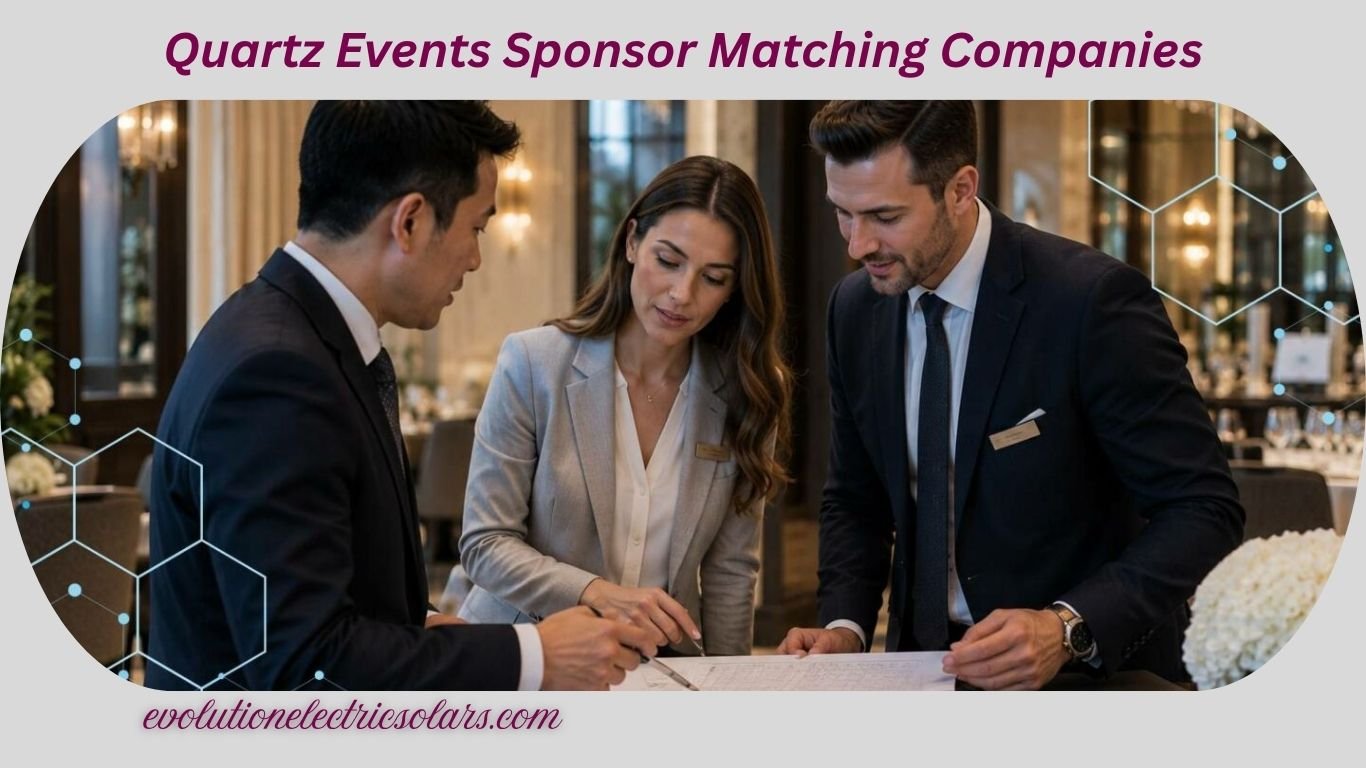
Quartz Network operates in the B2B event and solution-matching space. Its model focuses on connecting solution providers with senior business decision-makers through curated events, scheduled one-on-one meetings, networking, educational sessions, and solution-finding services. Quartz Network says its events are invitation-only and that attendees are vetted before events. Its sponsor program is designed around qualified meetings rather than simply selling exhibition space.
For companies researching sponsor matching, event matchmaking, executive networking, or qualified B2B meetings, understanding this model can make it easier to decide whether this type of event strategy fits their sales and marketing goals.
This guide explains what quartz events sponsor matching companies are, how the matching process works, what sponsors can expect, how Quartz Network differs from a traditional trade show, what businesses should evaluate before sponsoring, and how to measure the actual value of a meeting-based event.
What Are Quartz Events Sponsor Matching Companies?
The phrase quartz events sponsor matching companies generally refers to the business model behind events where sponsors are connected with carefully selected business buyers rather than being left to find prospects on their own.
In a traditional conference, a sponsor may receive a booth, branding opportunities, speaking options, attendee access, or networking benefits. The sponsor then has to attract people to its booth or approach attendees during the event.
A sponsor-matching model changes that process.
Instead of relying mainly on foot traffic, the event organizer works to identify attendees whose responsibilities, business challenges, and technology needs could align with a sponsor’s offering. Meetings can then be organized around those potential matches.
Quartz Network describes its event sponsorship approach as meeting-based B2B events that put solution providers in front of senior decision-makers. Sponsors can receive information about prospective customers before meetings and select attendees they want to meet.
This is important because a qualified conversation can be more useful than hundreds of random contacts.
For example, imagine a cybersecurity company selling an enterprise security platform. At a large trade show, its representatives might speak with students, junior employees, unrelated vendors, competitors, consultants, and a small number of potential buyers.
At a curated meeting event, the goal is different.
The company may be introduced to technology leaders who have responsibilities related to cybersecurity and may already be evaluating solutions.
The basic idea is simple:
- Business challenge
- Qualified buyer
- Suitable solution provider
- Scheduled conversation
That structure is one reason the model has attracted attention from B2B companies looking for more predictable event-based demand generation.

How the Quartz Network Model Works
The Quartz Network approach combines executive events with structured solution matching.
Quartz Network says it has operated for more than 18 years and positions itself as a matchmaker between B2B solution providers and the people who purchase or influence those solutions.
The process can be understood through several stages.
1. Identify the Right Executive Audience
The first step is audience selection.
Different business leaders have different responsibilities. A CFO may be interested in financial technology, cost reduction, forecasting, compliance, or enterprise planning. A CMO may care about marketing technology, customer experience, demand generation, analytics, and digital strategy.
Quartz Network organizes events around specific executive functions and business areas, including information technology, marketing, finance, human resources, supply chain, procurement, and data strategy.
This specialization is important because sponsor matching becomes stronger when the audience has a clear business focus.
2. Vet and Qualify Attendees
A large audience does not automatically create a valuable event.
The quality of the attendees matters.
Quartz Network states that its events are invitation-only and that its team vets attendees before events. It also says its sponsorship events are designed around senior-level decision-makers.
For sponsors, this can reduce one of the biggest problems with traditional event marketing: spending time searching for the right people after arriving at the event.
3. Understand the Sponsor’s Ideal Customer
The other half of the matching process is understanding the sponsor.
A sponsor may provide information about:
- Target industries
- Company size
- Geographic markets
- Executive roles
- Technology needs
- Business problems
- Existing systems
- Buying priorities
- Solution categories
- Ideal customer profiles
This information helps the event team determine which attendees may be relevant.
The better the sponsor defines its ideal customer, the more useful the resulting meetings can become.
4. Match Sponsors With Potential Buyers
Once audience information and sponsor requirements are understood, potential matches can be identified.
Quartz Network says sponsors can see who is attending ahead of time and select people they want to meet. It also says prospective attendees are informed about meetings in advance.
This is a major difference between casual networking and structured matchmaking.
Instead of hoping to meet the right person, the sponsor enters the event with a planned schedule.
5. Conduct One-on-One Meetings
The meeting itself is where the model becomes practical.
Also Read:Anonibs: Complete Guide to Anonymous Forums
A one-on-one meeting gives both sides a focused environment to discuss business needs.
For a sponsor, the objective should not simply be to deliver a sales pitch.
A stronger approach is:
- Understand the problem
- Ask relevant questions
- Explain possible solutions
- Establish fit
- Agree on a useful next step
The buyer also benefits because the meeting can be used to investigate potential solutions without spending weeks searching through vendors.
6. Continue the Relationship After the Event
The value of a B2B meeting rarely ends when the event ends.
A sponsor may need several conversations before an opportunity becomes a sales pipeline opportunity.
That makes follow-up a critical part of event ROI.
The sponsor should record:
- Who attended the meeting
- Business problem discussed
- Buying timeline
- Current solution
- Decision-making process
- Next agreed action
- Internal stakeholders
- Estimated opportunity value
Without this information, even a highly qualified meeting can be lost.
Why Sponsor Matching Is Different From Traditional Trade Shows
Traditional trade shows remain useful for many businesses, but their value is often based on exposure, networking volume, product demonstrations, and brand visibility.
Sponsor matching has a different emphasis.
The traditional trade show model often looks like this:
Exhibit → attract visitors → qualify conversations → collect contacts → follow up.
A meeting-based model looks more like this:
- Define ideal customer
- Match with relevant executives
- Schedule meetings
- Conduct conversations
- Follow up
Neither model is automatically better for every company.
The right choice depends on the company’s objective.
If a company wants broad brand awareness, a large trade show may make sense.
If it wants concentrated conversations with specific business leaders, a curated meeting event may be more attractive.
This distinction is especially important for companies selling complex B2B products.
Enterprise software, consulting, cybersecurity, analytics, supply chain technology, financial technology, HR technology, and other high-value solutions often require conversations with multiple stakeholders.
A short booth conversation may not provide enough time.
A scheduled meeting creates a more controlled environment.
What Makes Quartz Network’s Event Sponsorship Approach Different?
Quartz Network’s sponsorship pages emphasize three areas: qualified meetings, prospect information, and sponsor-selected meetings. The company says sponsorship packages can include guaranteed meeting volumes ranging from 15 to 120 meetings, depending on the package.
This approach is fundamentally different from paying for exposure alone.
The sponsor is not simply purchasing space.
It is purchasing access to a structured meeting environment.
Quartz Network also promotes additional connection opportunities, including educational sessions, thought leadership, and networking experiences.
That combination can be valuable because buyers rarely make decisions based on one conversation alone.
They may want to hear an expert presentation, compare approaches with peers, meet vendors, and understand the wider market.
Which Types of Companies Can Benefit?
The sponsor-matching model is particularly relevant to companies selling products or services to other businesses.
Potential categories include:
Technology Companies
Software vendors can use executive events to demonstrate how their platforms solve specific business problems.
This can be especially useful for enterprise technology companies because decision-makers may require detailed discussions before considering a purchase.
Cybersecurity Providers
Security vendors often need conversations with CIOs, CISOs, IT leaders, risk teams, and compliance professionals.
A curated event can provide a more targeted environment than general advertising.
Quartz Network’s technology-focused VISIONS events cover areas such as security, data, cloud, compliance, storage, analytics, and telecommunications.
Marketing Technology Companies
Marketing platforms may benefit from direct access to CMOs and senior marketing professionals.
Quartz Network’s CONNECT CMO sponsorship offering targets areas such as account-based marketing, customer engagement, demand generation, marketing technology, analytics, product marketing, and customer experience.
HR Technology Companies
HR software and services companies can use targeted events to connect with leaders responsible for recruiting, talent, employee experience, benefits, learning, compensation, and organizational development.
Quartz Network’s CONNECT HR events are built around these types of responsibilities.
Supply Chain and Procurement Providers
Supply chain technology companies often sell complex solutions that require direct discussions about operations.
Quartz Network’s SCOPE sponsorship program covers areas including procurement, demand planning, inventory management, transportation, warehouse management, systems integration, and supply chain visibility.
Financial Technology and Business Services
Financial software, consulting, risk management, accounting, compliance, and other professional services can benefit from direct access to finance leaders.
Quartz Network’s finance-focused events target areas such as budgeting, forecasting, financial reporting, cybersecurity, ERP, FP&A, procurement, risk management, and tax planning.
The Importance of Senior Decision-Makers
One of the strongest features of sponsor matching is access to people with meaningful responsibility.
A lead is not necessarily valuable just because the person’s email address has been collected.
The lead becomes more useful when the person:
- Has responsibility for the relevant business area
- Understands the business problem
- Can influence a purchase
- Controls or influences a budget
- Is involved in vendor evaluation
- Has a defined business need
- Can introduce the appropriate internal decision-maker
Quartz Network states that its event audience is composed of senior-level decision-makers and that its attendees are vetted.
However, sponsors should still perform their own qualification.
Senior title alone does not guarantee buying intent.
A VP may be interested in a topic but have no active project.
Another executive may have an urgent problem and be ready to evaluate vendors.
The second conversation is usually more commercially valuable.
How to Evaluate a Sponsor Match
Not every meeting should be treated equally.
A useful way to evaluate a meeting is through five questions.
Is the Person Relevant?
Does the attendee’s role connect directly to your solution?
Is the Company a Good Fit?
Does the organization match your ideal customer profile?
Is There a Business Problem?
Is there an actual problem that your product or service can address?
Is There Timing?
Is the company considering a solution now, later this year, or sometime in the future?
Is There a Next Step?
Did both parties agree to continue the conversation?
These five questions can turn event networking into measurable sales intelligence.
What Sponsors Should Do Before a Quartz Event
Preparation can have a major impact on event results.
A sponsor should not wait until the event begins to decide what it wants from the meetings.
Define the Ideal Customer Profile
Write down the characteristics of your best customer.
For example:
Industry: enterprise technology
Company size: 1,000+ employees
Decision-maker: CIO or CISO
Problem: outdated security infrastructure
Buying stage: active evaluation
Location: United States
Budget: enterprise-level
The more specific the profile, the easier it becomes to judge meeting quality.
Prepare a Clear Value Proposition
Executives have limited time.
Your team should be able to explain the value of the solution in simple language.
Instead of saying:
“Our platform provides an integrated ecosystem for next-generation digital transformation.”
Say:
“We help large companies reduce the time and cost required to manage their cloud infrastructure.”
Clear language makes meetings more productive.
Research Every Meeting
If prospect information is available before the event, use it.
Look at:
- Company strategy
- Recent business changes
- Technology environment
- Industry challenges
- Executive responsibilities
- Public announcements
- Potential pain points
The goal is not to memorize a company website.
The goal is to enter the meeting with useful questions.
Create Questions, Not Just Slides
A common mistake is preparing a presentation and trying to deliver it to every attendee.
B2B meetings work better when they are conversational.
Useful questions include:
“What is your biggest challenge in this area today?”
“How are you solving it right now?”
“What would you change about your current approach?”
“Is this something your team plans to address this year?”
“What would the ideal solution look like?”
These questions reveal buying signals.
What Happens During a Good Sponsor Meeting?
A strong meeting usually follows a simple structure.
Start With Context
Confirm the reason for the conversation.
“From the information we received, it looks like you’re exploring ways to improve X. Is that still a priority?”
This creates alignment.
Discover the Problem
Ask open questions.
Do not immediately launch into a product demonstration.
Connect the Solution to the Problem
Once you understand the issue, explain only the parts of your solution that matter.
Confirm Fit
Ask whether the approach addresses the business problem.
Agree on a Next Step
The next step could be:
- Technical demonstration
- Security review
- Procurement conversation
- Executive meeting
- Proposal
- Pilot
- Follow-up call
A meeting without a next step is difficult to measure.
Measuring Quartz Event Sponsorship ROI
Event ROI should not be measured only by the number of meetings.
A better measurement system includes several levels.
Meeting Volume
How many meetings did the team complete?
Meeting Quality
How many meetings involved an ideal customer?
Qualified Opportunities
How many conversations became qualified sales opportunities?
Pipeline
What potential revenue entered the pipeline?
Closed Revenue
How much revenue eventually came from event-generated opportunities?
Cost Per Opportunity
Divide total event investment by qualified opportunities.
Customer Acquisition Cost
Compare event-generated customers with other acquisition channels.
This allows companies to determine whether event sponsorship is producing commercial value.
A Simple Event ROI Example
Imagine a company spends $50,000 on an event sponsorship.
It receives 50 meetings.
If 30 meetings are genuinely relevant, the company has a 60% relevant-meeting rate.
Suppose 10 become qualified opportunities.
That means the company spent approximately $5,000 per qualified opportunity.
If three opportunities eventually become customers worth $100,000 each, the event has generated $300,000 in initial contract value.
This is much more useful than saying:
“We met 50 people.”
The real question is:
“What business value came from those meetings?”
Why Qualification Data Matters
Pre-meeting information can significantly improve sales preparation.
Quartz Network says sponsors receive detailed information about prospective customers and can use attendee information to prepare for meetings.
This can help sales representatives avoid generic presentations.
For example, if an attendee has already identified a challenge with data integration, the sales representative can prepare examples related to data integration rather than spending 20 minutes explaining unrelated product features.
This creates a better experience for both parties.
Quartz Events and Account-Based Marketing
Sponsor matching can also support account-based marketing, or ABM.
ABM focuses marketing and sales efforts on specific high-value accounts.
A curated event can fit naturally into an ABM strategy.
A company can:
- Identify target accounts.
- Identify relevant executives.
- Look for those accounts within event audiences.
- Request relevant meetings.
- Prepare account-specific messaging.
- Continue outreach after the event.
This makes event sponsorship part of a larger revenue strategy rather than an isolated marketing activity.
Quartz Network’s Broader Solution-Matching Model
Quartz Network is not limited to event sponsorship.
Also Read:Active Cornering Enhancement: Complete Guide to ACE System, Benefits & How It Works
Its broader platform also focuses on helping business professionals identify and connect with suitable solution providers.
Quartz Network describes QN Solutions as an on-demand platform where users can explain their business challenges and receive a curated shortlist of solution providers.
Its membership pages describe a similar process:
- Create a project
- Get matched
- Take meetings
This is an important distinction.
The organization is building a broader ecosystem around executive communities, events, learning, and business solution discovery.
For solution providers, that can create opportunities beyond a single event date.
Quartz Network Events vs. General Networking Events
General networking events usually depend on spontaneous conversations.
You arrive, meet people, exchange contact information, and decide later whether there is a reason to continue.
Quartz Network’s event structure is more organized.
The company describes its events as personalized, invitation-only experiences where schedules can include one-on-one meetings, educational content, and networking.
The advantage is efficiency.
The disadvantage is that structured meetings can feel less spontaneous.
Companies should therefore decide whether they need controlled lead generation or broad relationship building.
Potential Advantages for Sponsors
There are several potential advantages to this model.
More Focused Conversations
The sponsor can spend more time talking to relevant professionals.
Better Preparation
Advance information allows sales teams to research attendees.
Reduced Prospecting Time
The event organizer handles much of the audience identification and scheduling process.
Senior-Level Access
The model is designed around senior professionals rather than general event traffic.
Predictable Meeting Structure
A scheduled meeting calendar is easier to plan around than informal networking.
Multiple Engagement Formats
Sponsors may have opportunities for meetings, networking, educational sessions, and thought leadership.
Possible Limitations Sponsors Should Consider
A professional evaluation should also consider limitations.
First, qualified does not mean guaranteed buyer.
An executive may be relevant but not ready to purchase.
Second, meeting quantity does not automatically equal meeting quality.
A package with many meetings may not be better than a smaller number of highly relevant meetings.
Third, sponsorship costs should be evaluated against actual pipeline results.
Fourth, sales follow-up remains the sponsor’s responsibility.
Fifth, companies with very broad target markets may need several events to reach enough segments.
The best approach is to evaluate the model using business outcomes rather than marketing promises.
How to Get Better Results From Quartz Events Sponsor Matching Companies
The strongest results usually come from treating the event as part of a complete sales process.
Before the Event
Define your ICP.
Research attendees.
Select priority meetings.
Prepare questions.
Set revenue goals.
Assign team members to meetings.
During the Event
Listen carefully.
Take detailed notes.
Avoid generic pitches.
Identify buying signals.
Confirm next steps.
After the Event
Follow up quickly.
Personalize each message.
Share relevant resources.
Schedule agreed meetings.
Update the CRM.
Score opportunities.
Measure pipeline.
This creates a complete event-to-revenue process.
What Makes a Meeting Truly Qualified?
A qualified meeting should have more than a senior job title.
A practical qualification framework can include:
Relevance + Problem + Authority + Timing + Next Step.
For example, a CIO from a large company is highly relevant to an enterprise IT solution.
But if the CIO has no current need, no budget, and no project, the opportunity may be weak.
A director with an active project, budget responsibility, and a defined timeline could be more valuable.
Therefore, sponsors should score meetings based on actual buying conditions.
The Role of Trust in B2B Event Matching
Trust is particularly important when events connect vendors with executives.
Executives do not want every event to become a sales environment.
Quartz Network emphasizes that its executive community is designed to be free from unwanted solicitation and that member information is not shared without permission.
For event organizers, maintaining that trust is essential.
For sponsors, the lesson is equally important:
Do not treat access as permission to pressure someone.
A useful meeting should help the buyer understand whether the solution is relevant.
If the solution is not suitable, the professional approach is to say so.
That can actually improve long-term credibility.
The Future of B2B Sponsor Matching
The future of event sponsorship is likely to become increasingly data-driven.
Buyers have less time.
Sales teams face higher customer acquisition costs.
Marketing teams are expected to show measurable revenue impact.
These pressures make structured matchmaking attractive.
Technology can also improve the process through:
- AI-assisted matching
- Better attendee qualification
- Automated meeting recommendations
- CRM integration
- Intent signals
- Personalized agendas
- Post-event lead scoring
- Pipeline attribution
However, technology should support human judgment rather than replace it.
A matching algorithm can identify similarities between a buyer and a vendor.
It cannot always understand organizational politics, budget cycles, personal priorities, or the quality of a business relationship.
Human qualification remains important.
Quartz Events Sponsor Matching Companies and the Changing B2B Buyer Journey
B2B buyers increasingly research products before speaking with sales representatives.
That changes the role of events.
The buyer may arrive already informed.
Instead of asking, “What does your company do?” they may ask:
“How would this work with our current system?”
“What does implementation look like?”
“How long does deployment take?”
“How have companies like ours used this?”
“What is the expected ROI?”
This means sponsors need to prepare for deeper conversations.
The best event representatives are not simply salespeople.
They are problem solvers.
Questions Sponsors Should Ask Before Buying a Package
Before signing a sponsorship agreement, companies should request clear answers about:
- Who attends?
- How are attendees qualified?
- What seniority levels are represented?
- What industries are included?
- How are meetings matched?
- Can sponsors choose meetings?
- What information is provided beforehand?
- How many meetings are included?
- What counts as a completed meeting?
- What happens if a meeting cancels?
- What additional branding opportunities are included?
- What follow-up information is available?
- How is event ROI measured?
These questions help turn a marketing purchase into a measurable business decision.
Questions Attendees Should Ask Before Meeting Sponsors
Buyers should also protect their time.
Before accepting a meeting, ask:
- What problem does this company solve?
- Is the solution relevant to my current priorities?
- Is this a vendor I genuinely want to investigate?
- What information should I prepare?
- Is there a better internal stakeholder who should attend?
This helps keep the event useful for both sides.
Common Mistakes Sponsors Make
Mistake 1: Treating Every Meeting as a Sales Pitch
A meeting should begin with discovery.
Mistake 2: Ignoring Attendee Information
If detailed information is available, use it.
Mistake 3: Using the Same Presentation for Everyone
Different executives have different priorities.
Mistake 4: Failing to Take Notes
Without notes, follow-up becomes generic.
Mistake 5: Waiting Too Long to Follow Up
Interest can disappear quickly.
Mistake 6: Measuring Only Meeting Volume
Revenue impact matters more than raw meeting counts.
Mistake 7: Overpromising
If your solution cannot solve the problem, say so.
Trust is more valuable than one artificial opportunity.
How Sales and Marketing Teams Can Work Together
Event sponsorship works best when marketing and sales share responsibility.
Marketing can manage:
- Event strategy
- Branding
- Content
- Pre-event campaigns
- Audience research
- Reporting
Sales can manage:
- Meeting preparation
- Discovery
- Qualification
- Follow-up
- Opportunity creation
- Revenue conversion
Both teams should agree on what success means before the event begins.
For example:
Marketing goal: 40 qualified meetings.
Sales goal: 12 opportunities.
Revenue goal: $500,000 pipeline.
This creates accountability.
A Practical Quartz Event Sponsorship Checklist
Before the event:
- Define your ideal customer.
- Review the attendee profile.
- Select high-priority meetings.
- Research companies.
- Prepare questions.
- Train the event team.
- Set measurable goals.
During the event:
- Arrive prepared.
- Listen before pitching.
- Record business challenges.
- Identify decision-making roles.
- Confirm timelines.
- Agree on next steps.
After the event:
- Follow up promptly.
- Personalize communication.
- Update your CRM.
- Score opportunities.
- Track pipeline.
- Review meeting quality.
- Calculate ROI.
Are Quartz Events Worth It?
There is no universal answer.
Also Read:InstaPV: Complete Guide to Anonymous Instagram Story Viewer
Quartz Network can be attractive for companies that sell high-value B2B products and need direct access to senior decision-makers.
Its meeting-based model is particularly relevant when a company values qualified conversations more than large numbers of unfiltered contacts.
Quartz Network itself reports that 97% of its sponsors would recommend a Quartz Network event to their peers, 99% of attendees report following up with at least one solution provider after an event, and 80% of Fortune 500 companies have attended a Quartz Network event. These are company-reported figures, so prospective sponsors should still evaluate them alongside their own goals, package terms, and expected ROI.
The most important question is not whether the event is popular.
It is whether the event can put your sales team in front of the right buyers at the right stage of the buying journey.
Final Thoughts on Quartz Events Sponsor Matching Companies
Quartz events sponsor matching companies represent a shift away from event marketing based mainly on visibility and toward event marketing based on relevant conversations.
Quartz Network’s approach combines invitation-only executive communities, specialized leadership events, one-on-one sponsor meetings, networking, education, and solution matching. Its sponsorship model is designed to connect solution providers with senior professionals whose responsibilities and business needs may align with their offerings.
For sponsors, the greatest opportunity is not simply obtaining a list of executives.
It is using structured meetings to understand real business problems and create meaningful next steps.
For buyers, the value is having a focused way to investigate potential solutions without spending excessive time searching through the entire vendor market.
The companies most likely to benefit are those with a clearly defined ideal customer profile, a strong solution, an experienced sales team, and a reliable follow-up process.
In other words, the event can create the opportunity, but the sponsor still has to create the relationship.
That is the central lesson behind the quartz events sponsor matching companies model: better matching can improve the quality of business conversations, but long-term value comes from what happens before, during, and after those conversations.
FAQs About Quartz Events Sponsor Matching Companies
What does quartz events sponsor matching companies mean?
The phrase refers to a B2B event and matchmaking model in which sponsors or solution providers are connected with relevant business decision-makers through curated meetings. Quartz Network uses this type of approach across several executive-focused event categories.
Is Quartz Network a traditional trade show organizer?
Quartz Network’s model differs from a conventional trade show because it emphasizes curated executive experiences and scheduled one-on-one meetings in addition to networking, educational content, and other event activities.
Who can sponsor Quartz Network events?
Sponsorship is generally aimed at B2B solution providers whose products or services are relevant to the executive audience of a particular event. Different events focus on areas such as IT, marketing, finance, HR, supply chain, procurement, and data strategy.
Are Quartz Network events only for technology companies?
No. Technology companies are an important part of the solution-provider audience, but the broader event categories cover professional services, consulting, finance, HR, procurement, supply chain, marketing, data, and other business solutions.
How does sponsor matching work?
The process generally involves understanding the sponsor’s ideal customer, reviewing qualified attendees, identifying potential matches, and arranging meetings. Quartz Network says sponsors can select attendees they want to meet and receive information to help prepare for those conversations.
Are Quartz Network attendees decision-makers?
Quartz Network states that its event audiences are senior-level decision-makers and that attendees are vetted before events. However, sponsors should still qualify each individual meeting based on business need, authority, timing, and fit.
Can a sponsor choose which attendees it wants to meet?
Quartz Network says sponsors know who is attending ahead of time and can handpick people they want to meet, with meeting schedules customized around those selections.
How many meetings can a sponsor receive?
Quartz Network currently states that its sponsorship model can include guaranteed meeting volumes ranging from 15 to 120 meetings, depending on the package. Sponsors should confirm the current package, terms, and definition of a completed meeting directly with the company before purchasing.